
Rowing Machines
Rowing machines train the legs, back and arms in one low-impact movement. The range includes fan and magnetic rowers, water rowers and commercial models for home gyms and conditioning floors.
Resistance type shapes the feel: fan rowers get harder the faster you pull, magnetic resistance is quiet and adjustable, and water mimics a real stroke. Compare other cardio machines or protect floors with equipment mats.


-

 Vendor:Muscle D Fitness
Muscle D Fitness Sweet Fan-Magnetic Rower
Low stockRegular price $1,105.00 USD -
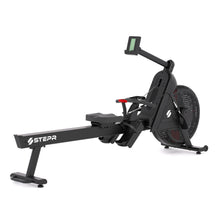
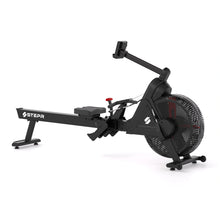 Top SellerUp to 20% off
-
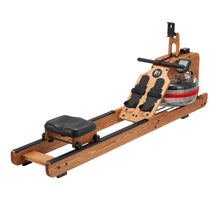
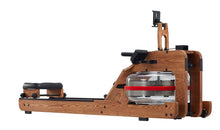
-
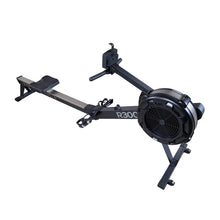
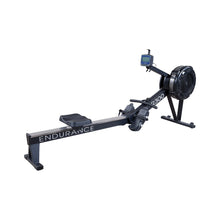 Up to 35% offVendor:Endurance by Body-Solid
Body-Solid Endurance R300 Rower
In stockSale price $925.00 USD Regular price$1,429.90 USD


Compare popular Rowing Machines
Key specs side by side for our most popular models.
| Specs | |||
|---|---|---|---|
| Category | Air Rower | Water Rower | Air Rower (Elite) |
| Best For | Home cardio + full body | Quiet home rowing | Elite / commercial rowing |
| Resistance Type | Air (user-controlled) | Water (adjustable tank) | VPR™ adaptive air |
| Resistance Levels | Stepless air | Variable water volume | 100+ virtual gears |
| Motor / Magnet Use | None (self-powered) | None | None |
| Frame | Heavy-duty steel | High-quality steel | Commercial-grade steel |
| Weight Capacity | 500 lb | User-rated | Commercial rated |
| Dimensions L × W × H | Foldable / compact | Stands upright for storage | Elite commercial |
| Console / Metrics | Time, HR, strokes, calories, distance, watts | Tablet holder only | Backlit console w/ pace + watts |
| Heart Rate Compatibility | Polar wireless | None | Bluetooth HR |
| Pre-Set Programs | 8 programs | None | Open training modes |
| Quiet Operation | ✓ | ✓ | ✓ |
| Storage / Mobility | Breaks into pieces | Stands upright | Commercial footprint |


← Scroll to compare more →
Frequently asked questions
Rower vs. ski machine — which should I buy?
Rowers are seated, horizontal, and use a pulling motion — excellent full-body cardio emphasizing back, arms, and legs (60% lower body, 40% upper body). Ski machines (SkiErg-style) are standing, vertical, and use a pulling-down motion — heavier upper-body emphasis (60% upper body, 40% core/lower). Both burn massive calories. If forced to pick one, a rower is more versatile; ski machines are the specialist choice.
Air, magnetic, water, or hydraulic resistance — what's the difference?
Air resistance (Concept2-style) gets harder the faster you pull — the CrossFit and competitive standard, loudest type. Magnetic resistance is silent with fixed levels — great for apartments or media rooms. Water resistance feels most realistic (like rowing on water) and sounds pleasant but requires occasional tank maintenance. Hydraulic is budget-tier and wears out faster — avoid for serious training.
How much space does a rower need?
Rowers are longer than most people expect — plan for 7–8 ft of length × 2 ft wide during use, plus 2 ft of rear clearance. Many rowers store vertically against a wall (footprint drops to 2 × 2 ft) when not in use, which is a huge benefit for home gyms. Ski machines are much more compact — typically 4 × 2 ft plus vertical space.
Is rowing safe for people with back issues?
Generally yes, with proper form — rowing strengthens the lower back when done correctly. But: poor form (rounding the spine, using your arms to initiate the pull) can aggravate existing back pain. If you have disc issues or chronic low-back pain, consult a physical therapist before starting, and consider a recumbent bike as a lower-risk alternative.
Do I need a ski machine if I already have a rower?
For most users, no — the movement patterns overlap significantly. Ski machines are worth adding if you specifically train for skiing, want a pure upper-body pull station, or run group fitness classes that use standing cardio stations. For general fitness, a rower covers more ground.
What resistance level do I need for serious training?
On air rowers, look for 10 damper settings (or equivalent) — lower settings mimic Olympic sculling (fast, light), higher settings mimic heavy rowing (slow, powerful). Commercial and serious home rowers almost always use this system. Magnetic rowers typically offer 16+ resistance levels for comparable variety.
Not sure which one fits your space?
Talk to our equipment specialists about fit, power needs and delivery before you buy, or plan it yourself with our free tools and calculators.
Treadmill Training Guides
-

Best Treadmill for Bad Knees: 6 Picks and What to Look For
How to pick a treadmill when your knees are sore,...11 min read -

Stair Climber vs. Treadmill: A No-B.S. Guide (Home & Commercial)
Not sure if you need a stair climber or a...4 min read -

HIIT Treadmill Workout: 3 Plans and the Right Machine
Three treadmill HIIT plans (Beginner, Intermediate and Advanced), how to...9 min read


