
Battle Ropes
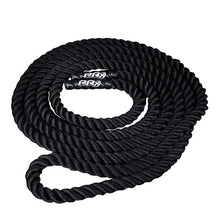
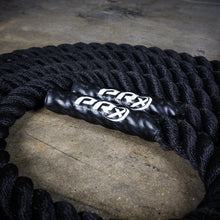
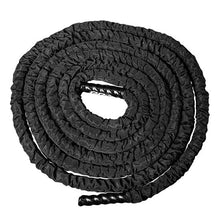
Battle ropes build conditioning, grip and shoulder endurance with high-intensity waves, slams and circuits. Options include standard and nylon-covered ropes that resist fraying indoors and outdoors.
Longer, thicker ropes are harder to move, so match the rope to your space and training level, and anchor it securely before use. See more functional training gear or weight sleds.


-
-
 Up to 10% offSold outVendor:PRx Performance
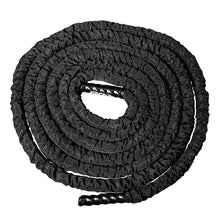
PRx Nylon Covered Battle Rope
Sale price $89.99 USD Regular price$99.99 USD -


Frequently asked questions
What length and thickness should I buy?
Length: 30 ft covers most home gyms, 40 ft is the commercial standard, 50 ft is for pro facilities. Length determines workout intensity — longer ropes are heavier and more demanding. Thickness: 1.5-inch diameter is the general-use standard; 2-inch is heavier and builds more grip strength; 2.5-inch is for serious grip training. For most home users, 40 ft × 1.5 inch is the sweet spot.
Do I need an anchor to use battle ropes?
Yes — battle ropes must attach to a fixed anchor point. Options: a wall-mounted anchor (sold separately, mounts to studs or concrete), a power rack or squat stand (loop the rope around an upright), or outdoor anchoring to a tree or post. Some kits include a heavy-duty anchor kit; others sell separately. Check before ordering.
How much space do battle ropes need?
For a 40 ft rope folded in half at the anchor, you need 20 ft of clear space in front of the anchor, plus 6–8 ft on each side for full arm motion. This is more space than most indoor home gyms have — battle ropes often live in the garage, basement, or outdoors. Smaller 30 ft ropes need proportionally less space.
Poly Dacron or nylon — what's the difference?
Poly Dacron (the most common material) is affordable, durable, and doesn't shed — the standard for indoor gyms. Nylon is even tougher and more weather-resistant — better for outdoor storage. Avoid cheap manila or sisal ropes — they shed fibers, split over time, and can't match synthetic performance.
What workouts can I do with battle ropes?
Waves (alternating, double, lateral), slams, circles, jumping slams, ropes-to-squats combos, and more. A single 15-minute battle rope workout provides serious conditioning — they're a favorite for athletic training, MMA, and HIIT programs because they combine upper-body power endurance with serious cardiovascular demand.
Not sure which one fits your space?
Talk to our equipment specialists about fit, power needs and delivery before you buy, or plan it yourself with our free tools and calculators.
Cable Machine & Functional Training Guides
-

Cable Machine Buying Guide: Types, Space, Stack, Price
How to choose a cable machine: the four types, stack...11 min read -

TRX Home2 vs Pro4 vs Tactical: Which to Buy
Home2 is the best value for most people training at...6 min read

