
Kettlebells
Shop kettlebells for home gyms, studios and strength training spaces. Explore cast-iron and competition kettlebells for swings, squats, presses and carries.
Compare available weights, handle dimensions, materials and finishes to find the right fit for your training. Check each product page for specifications and weight options.


-
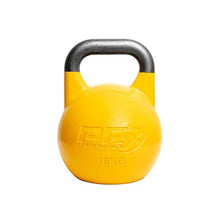
 Up to 12% offVendor:PRx Performance
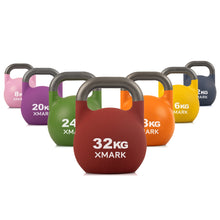
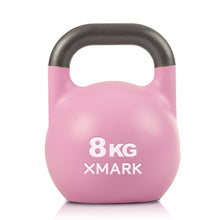
PRx Competition Kettlebells
290 in stockSale price From $109.99 USD Regular price$124.99 USD -
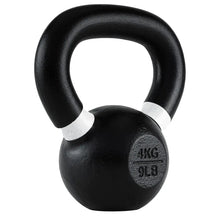
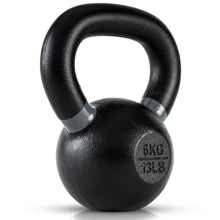 Up to 25% offVendor:Rage Fitness
Rage Fitness Single Cast Iron Kettlebell
1966 in stockSale price From $24.99 USD Regular price$29.99 USD -
 Premium Build
 -
 Up to 44% offVendor:PRx Performance
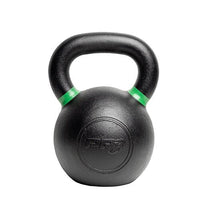
PRx Powder Coated Cast Iron Kettlebells
965 in stockSale price From $24.99 USD Regular price$44.99 USD -
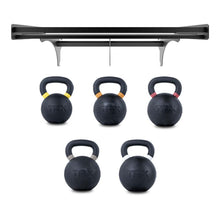
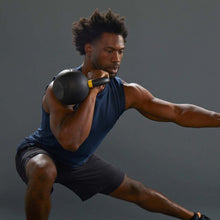 Up to 23% offVendor:TRX
TRX Rubber Coated Gravity Cast Kettlebell Shelf Bundle
24 in stockSale price From $1,139.65 USD Regular price$1,923.61 USD -
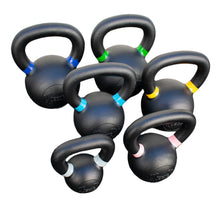
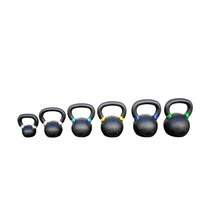 Up to 20% offVendor:Muscle D Fitness
Muscle D Fitness Cast Kettlebell
139 in stockSale price From $23.00 USD Regular price$25.00 USD
Frequently asked questions
What are kettlebells good for?
Kettlebells combine strength, conditioning, and mobility in a single tool. Swings, cleans, snatches, and Turkish get-ups build explosive posterior-chain power and cardiovascular conditioning at the same time. Goblet squats and single-arm presses train strength. They're especially valuable for small home gyms, functional training studios, and anyone short on time — a 20-minute kettlebell session can hit everything.
Competition-style vs. cast-iron kettlebells — what's the difference?
Cast iron kettlebells vary in size as weight increases — a 16 kg bell is smaller than a 32 kg bell. Most affordable home-use kettlebells are cast iron. Competition kettlebells (sometimes called "pro-grade") are all the same dimensions regardless of weight, which keeps the technique consistent as you progress. Competition bells are color-coded by weight and used in kettlebell sport. For general training, either works fine.
What weight should I start with?
For most beginners: women start with 8–12 kg (18–26 lb) for swings and 4–8 kg (9–18 lb) for presses. Men start with 16 kg (35 lb) for swings and 12 kg (26 lb) for presses. These are strong starting loads because kettlebell movements recruit big muscle groups. Don't go lighter than this — too-light bells make technique harder to learn.
Do kettlebells come in lb or kg?
Both. Traditional kettlebells are marked in kilograms (8, 12, 16, 20, 24, 28, 32 kg and up), which is the competition and Russian tradition. Many American-made kettlebells are marked in pounds (10, 15, 20, 25, 35, 45, 55 lb and up). Check the product listing — it matters if you're following a program written in one unit system.
How many kettlebells do I need?
For a home gym, two to four bells cover nearly everything: one lighter bell for presses and single-arm work, a medium bell for two-handed swings and squats, and a heavier bell for progression. For commercial facilities or small-group training, a full 8–48 kg set in even increments lets you program for all skill levels.
Do I need a kettlebell rack?
For more than 3–4 bells, yes. Kettlebells on the floor take up more space than they seem and can damage flooring. See our Kettlebell Racks for 3-tier horizontal racks and compact vertical options. A standard 3-tier commercial rack holds 9–12 bells in roughly 4 ft × 2 ft of floor space.
Not sure which one fits your space?
Talk to our equipment specialists about fit, power needs and delivery before you buy, or plan it yourself with our free tools and calculators.
Free Weight Training Guides
-

EZ Curl Bar vs Straight Barbell: A Detailed Comparison
Struggling to choose between an EZ curl bar and a...14 min read
