
-
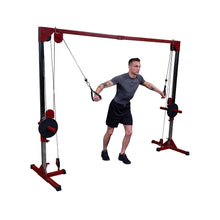
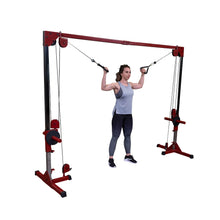 Vendor:Best Fitness Equipment
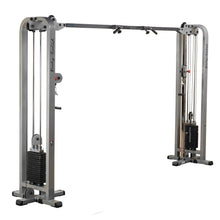
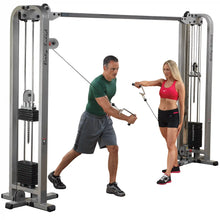
Best Fitness Cable Crossover BFCCO10
25 in stockRegular price $480.00 USDSale price $480.00 USD Regular priceUnit price per -
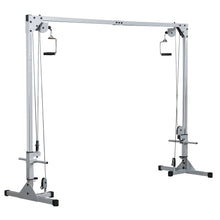
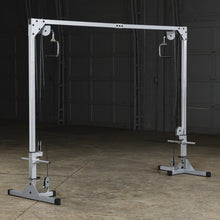 Up to 39% offVendor:Powerline by Body-Solid
Body-Solid Powerline Cable Crossover PCCO90X
25 in stockRegular price $520.00 USDSale price $520.00 USD Regular priceUnit price per$856.80 USD79% claimed
-
 Up to 16% offSold outVendor:Pro ClubLine
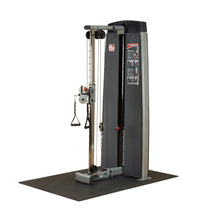
Body-Solid Pro Clubline Cable Crossover SCC1200G
Regular price From $4,275.00 USDSale price From $4,275.00 USD Regular priceUnit price per$4,995.00 USD -
 Up to 13% offVendor:Pro ClubLine
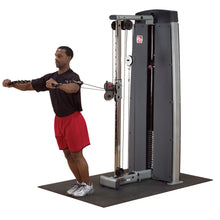
Body-Solid Pro Clubline Dual Cable Column Machine DPCCSF
Only 5 leftRegular price $3,025.00 USDSale price $3,025.00 USD Regular priceUnit price per$3,495.00 USD95% claimed
-
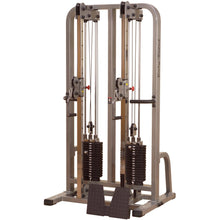
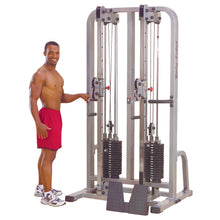 Up to 40% offVendor:Pro ClubLine
Body-Solid Pro Clubline Dual Cable Column SDC2000G2
Only 10 leftRegular price From $2,895.00 USDSale price From $2,895.00 USD Regular priceUnit price per$4,795.00 USD91% claimed
-
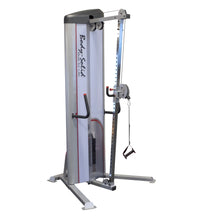
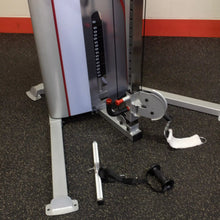 Up to 10% offSold outVendor:Pro ClubLine
Body-Solid Pro Clubline Series 2 Cable Column S2CC
Regular price From $3,010.00 USDSale price From $3,010.00 USD Regular priceUnit price per$3,295.00 USD -
 Up to 20% offVendor:Pro ClubLine
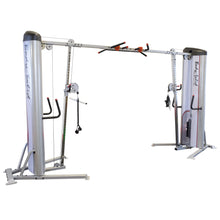
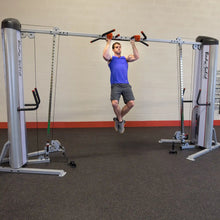
Body-Solid Pro Clubline Series 2 Cable Crossover S2CCO
30 in stockRegular price From $5,595.00 USDSale price From $5,595.00 USD Regular priceUnit price per$6,995.00 USD75% claimed
-
 Vendor:Muscle D Fitness
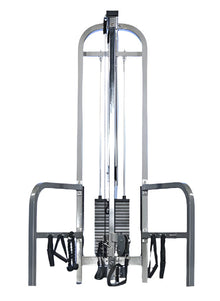
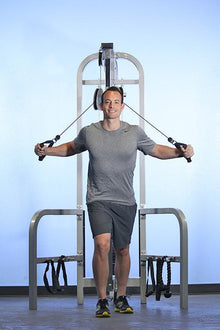
Muscle D Fitness High / Low Pulley Combo Machine
19 in stockRegular price $1,995.00 USDSale price $1,995.00 USD Regular priceUnit price per -
 Up to 14% offVendor:Muscle D Fitness
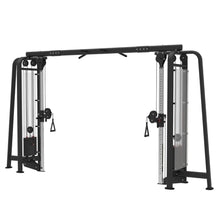
Muscle D Fitness Megatron Standard Cable Crossover
Color:25 in stockRegular price From $4,995.00 USDSale price From $4,995.00 USD Regular priceUnit price per$5,790.00 USD79% claimed
-
 Vendor:Muscle D Fitness
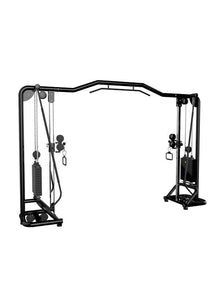
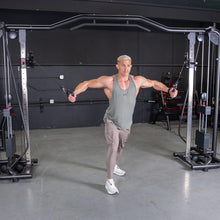
Muscle D Fitness Vogue Cable Crossover
Only 5 leftRegular price $5,109.00 USDSale price $5,109.00 USD Regular priceUnit price per -

 Vendor:Synergee
Synergee Cable Attachment Rack
92 in stockRegular price From $47.95 USDSale price From $47.95 USD Regular priceUnit price per$47.95 USD23% claimed
-

 Sold outVendor:Synergee
Synergee Cable Pulley System
Regular price $54.95 USDSale price $54.95 USD Regular priceUnit price per$54.95 USD -
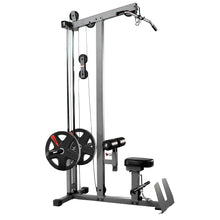 Sold outVendor:XMARK
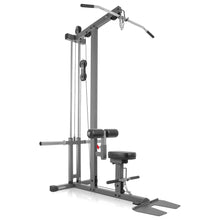
XMARK Lat Pull-Down Machine with Low-Row
Regular price $649.00 USDSale price $649.00 USD Regular priceUnit price per


Compare Popular Cable Machines
| Specs | ||||||||
|---|---|---|---|---|---|---|---|---|
| Best For | Entry home crossover | Budget home crossover | Compact dual-column | Commercial dual-column | Commercial dual-stack | Versatile combo machine | Commercial dual-use | Large commercial floor |
| Style | Cable Crossover | Cable Crossover | Dual Cable Column | Dual Cable Column | Cable Crossover | High / Low Pulley | Cable Crossover | Cable Crossover |
| Resistance Type | Plate loaded | Plate loaded | Selectorized | Selectorized | Selectorized | Selectorized | Selectorized | Selectorized |
| Weight Capacity / Stack | 300 lb capacity | Olympic plates | 2 × 160 lb | 2 × 200 lb | 160 / 210 / 310 lb options | 200 lb | 2 × 190 lb | 2 × 150 lb |
| Pulley Positions | Hi / low fixed | Fixed dual pulleys | Vertically adjustable | Adjustable vertical | 36 positions, 180° swivel | 100+ exercise options | Adjustable hi/lo columns | Adjustable hi/lo with trigger |
| Pull-Up Station | — | — | — | — | ✓ | — | ✓ | — |
| Shrouded Weight Stack | — | — | — | ✓ | ✓ | — | — | — |
| Footprint L × W | 37 × 110 in | 37 × 113 in | 44 × 46 in | Commercial size | ~53 × 120 in | 55 × 53 in | 167 × 32 in | 146 × 38 in |
| Height | 83 in | 83 in | 82.5 in | ~90 in | ~99 in | 87 in | 94 in | 98 in |
| Assembled Weight | 102 lb | 108 lb | 674 lb | Commercial | ~600 lb | 480 lb | 750 lb | 680 lb |
| Frame | Steel | Heavy-duty steel | 2×4, high-tensile steel | Heavy-duty steel | 2×3, 11-ga steel | Commercial grade | 11-ga steel | 2×4, 11-ga steel |
| Commercial Rated | — | — | ✓ | ✓ | ✓ | ✓ | ✓ | ✓ |
| Warranty — Home | Manufacturer | 10 yr frame | Lifetime | Lifetime | Lifetime | Manufacturer | 10 yr structural | Manufacturer |


Frequently asked questions
What's the difference between a cable machine, cable crossover, and functional trainer?
Cable crossovers are wide dual-tower units (typically 12–13 ft) built for traditional fly and crossover movements. Functional trainers are compact dual-pulley units with arms that swing and height-adjust — more versatile in less space. Single-station cable machines (lat pulldown, seated row, tricep station) are dedicated to one or two movements and usually have a larger weight stack. Pick based on your space and how you train.
What can I train on a cable machine?
Cables excel at isolation and constant-tension work: chest fly, tricep pressdowns, bicep curls, cable rows, lat pulldowns, face pulls, woodchops, cable squats, glute kickbacks, and lateral raises. Because the resistance is consistent through the full range of motion (unlike dumbbells, which vary with gravity), cables are especially effective for muscle development and rehab work.
How heavy should the weight stack be?
Most single-column cable machines have 150–250 lb stacks, and most cable crossovers run dual 160–210 lb stacks. Remember that a 2:1 pulley ratio (common on crossovers and functional trainers) cuts the felt resistance roughly in half, while 1:1 ratio lat pulldowns and rows give you the full stack weight at the handle. Check the listed pulley ratio before assuming a 200 lb stack is enough.
Do cable machines need specific attachments?
Yes — handles, ropes, straight bars, and specialty attachments attach to the cable via a standard clip. Most machines ship with a basic starter set. For a fully-stocked station you'll want a straight bar, EZ curl bar, tricep rope, lat bar, and single-grip handles. We stock a complete range in our Cable Attachments collection.
How much ceiling height do I need?
Cable machines with high pulleys (lat pulldowns, crossovers) typically require 7.5–8 ft (91+ inches) of ceiling clearance to use the top position properly. If you have an 8 ft ceiling, measure carefully and check each product's minimum height spec. Compact functional trainers can often work in 7–7.5 ft rooms if you don't need the absolute highest pulley position.
Are these machines easy to maintain?
Yes — most commercial cable machines use aircraft-grade steel cable sheathed in nylon, with sealed bearings in the pulleys. Routine maintenance is minimal: wipe down the frame, check cable wear every 6–12 months (especially in humid environments), and replace cables every few years on high-use machines. Most commercial brands offer lifetime frame warranties and 1–3 years on cables and pulleys.
Cable Machine & Functional Training Guides
-

Home Gym Space Requirements: Room-by-Room Guide
Generic home gym guides say "200-400 square feet" and leave...19 min readbuying-guide -

TRX Product Guide: Home2 vs Pro4 vs Tactical (Which Should You Buy?)
Choosing between TRX Home2, Pro4, and Tactical? Home2 is best...5 min readcable -

Essential Equipment for Your Bodybuilding Gym
Building a bodybuilding gym isn’t about collecting random gear. It’s...11 min readgym-design -

Stair Climber vs. Treadmill: A No-B.S. Guide (Home & Commercial)
Not sure if you need a stair climber or a...4 min readclimbers


