
Stair Climbers & Steppers
Climb your way to conditioning on commercial stair climbers and stepmills from STEPR and Muscle D Fitness — including the STEPR, STEPR+, STEPR PRO, and STEPR XL connected stair climbers, plus light-commercial and commercial stairmills with LED screen consoles. Compare stepping speed range, console features, and footprint to build serious lower-body cardio into any gym floor.


-
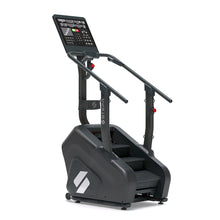
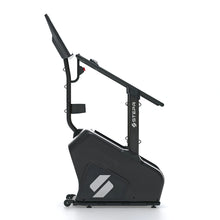 Trending on IGUp to 7% off
 -
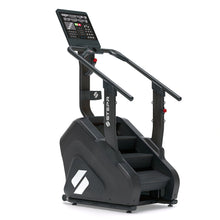
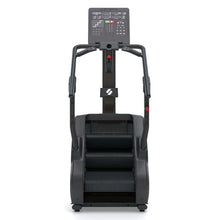 Up to 14% off
 -
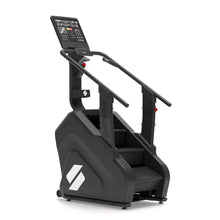
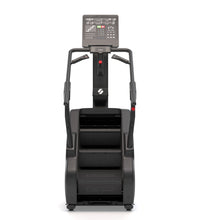 Top SellerUp to 33% off
 -
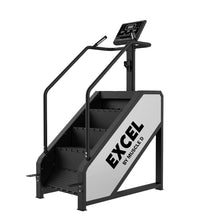
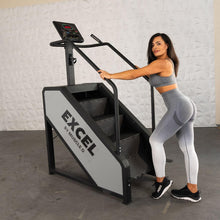 Vendor:Muscle D Fitness
Muscle D Fitness Light Commercial Stairmill
In stockRegular price From $2,995.00 USD -
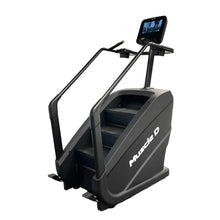
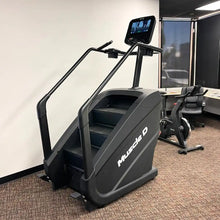 Up to 16% offVendor:Muscle D Fitness
Muscle D Fitness Commercial Stair Climber
In stockSale price $7,995.00 USD Regular price$9,495.00 USD
Frequently asked questions
Stair climber vs. stepper — what's the difference?
Stair climbers (also called stair mills or escalator-style) have a rotating staircase — you climb continuously as the stairs drop away. Harder workout, more functional, commercial standard. Steppers have two foot pedals that move up and down independently — more compact, lower impact, better for rehab and home use. Climbers burn more calories per minute; steppers are easier on the joints.
Is a stair climber really that hard?
Yes — stair climbing is one of the most metabolically demanding cardio activities. A moderate-pace climb burns 500–700 calories per hour, roughly 1.5× an elliptical at the same perceived effort. It also builds serious lower-body and glute strength. Start at low speeds (40–50 steps/min) and increase as your conditioning improves.
Who shouldn't use a stair climber?
Anyone with serious knee or hip joint issues should avoid rotating-stair climbers — the repeated high-angle loading is hard on these joints. Better alternatives include recumbent bikes, ellipticals, or seated steppers that remove the impact component. Always check with your doctor if you have existing joint injuries before using a climber.
What ceiling height do stair climbers need?
This is the feature most people miss. Stair climbers are tall — typically 7–8 ft in height, and the user stands on top, requiring 8–9 ft of total ceiling clearance. Measure before ordering. Home basements with 7 ft ceilings are a common deal-breaker. Steppers are much more compact — typically under 4 ft tall.
Do stair climbers have adjustable speed?
Yes — typically 24–160 steps per minute on commercial machines, with 1-step increments. Preset programs simulate mountain climbs, interval workouts, and fat-burn pacing. Lower speeds (30–60 spm) feel like a brisk walk; higher speeds (120+) feel like stadium-stair sprints. Most machines also offer speed quick-keys during workouts.
Are stair climbers quieter than treadmills?
Usually yes — stair climbers produce a consistent mechanical hum from the drive system but no foot-strike impact. Treadmills add the slap of each footfall, which is much louder. For shared apartments or multi-story facilities, stair climbers are often a better neighbor than treadmills — as long as the machine itself is well-maintained.
Not sure which one fits your space?
Talk to our equipment specialists about fit, power needs and delivery before you buy, or plan it yourself with our free tools and calculators.
Stair Climbing & Vertical Climber Guides
-

Stair Climber vs. Treadmill: A No-B.S. Guide (Home & Commercial)
Not sure if you need a stair climber or a...4 min read -

VersaClimber Workout: A Science-Backed Routine for Total-Body Cardio
Crush your next cardio session with this science-backed, 18-minute VersaClimber...4 min read

