Power Rack Buying Guide for Home Gyms: Dimensions, Depth, and Real-World Fit
Most guides ignore the brutal reality: racks need specific ceiling height and floor space. This shows dimensions, installation constraints, and how to measure before buying.

You've measured your garage ceiling. You've budgeted for the rack. You've even planned where the bench will go. Then the rack arrives, and you realize the bar path clips your ceiling fan, or the depth eats half your walkway, or you can't open the side door anymore. Most power rack guides skip the hard constraints. This one doesn't. You'll learn how to measure your space correctly, compare full racks against half racks using real dimensions, and avoid the three most expensive mistakes home gym buyers make.
Why Dimensions Matter More Than You Think

A rack that fits on paper doesn't always fit in your garage. The spec sheet lists footprint and height, but it won't tell you about the loaded bar extending 18 inches past the uprights, or the ceiling clearance you need for overhead press, or the fact that your bench placement depends on rack depth, not just floor space.
We've seen people buy full racks for 7-foot basements. We've watched them return half racks because they didn't account for bar overhang. The difference between a rack that works and one that doesn't comes down to three measurements most buyers overlook.
Ceiling Height and Bar Path
Your ceiling height matters more than the rack's listed height. An 83-inch rack doesn't need 83 inches of clearance. It needs 83 inches plus the height of a loaded barbell collar (about 9 inches) plus the vertical travel distance for overhead movements (another 12 to 18 inches depending on your arm length). That's 104 to 110 inches of total clearance for comfortable overhead work.

Most residential garages run 8 feet (96 inches) from floor to joist. That's tight for full overhead press inside a tall rack. You can work around it by pressing outside the rack or using a shorter half rack, but you need to know the constraint before you order.
Basements are worse. Finished basements often sit at 7 to 7.5 feet. Unfinished basements give you more room, but ductwork and floor joists cut into your usable height in unpredictable ways. Measure from the floor to the lowest obstacle in your lifting zone, not just the nominal ceiling height.

Floor Footprint vs. Usable Space
The footprint measurement tells you where the rack's feet touch the ground. It doesn't tell you where the equipment actually lives once you load a bar, position a bench, or step back to rerack after a set.
A rack with a 48-inch depth becomes a 66-inch depth once you slide a bench inside and account for the bar's overhang. Add another 24 to 36 inches behind the rack for walkway access, and you're using 90 to 102 inches of front-to-back space. That's 7.5 to 8.5 feet, which is the entire depth of many single-car garages.
Side-to-side clearance matters less, but you still need room to load plates without scraping the wall. Budget 12 inches of clearance on the side where you'll load your bar most often. If you're setting up in a narrow bay, that constraint alone can rule out wider racks.

Depth: The Most Overlooked Measurement
Depth is the front-to-back measurement from the rack's front uprights to its rear uprights or stabilizer feet. It's the dimension that catches the most buyers off guard because it compounds with everything else in your gym.
A shallow rack (under 36 inches) saves floor space but limits your squat depth and restricts which benches fit inside the uprights. A deep rack (48 inches or more) gives you room to squat comfortably and accommodates longer benches, but it pushes your total space requirement past what most garages can handle.

Depth also determines which attachments you can add later. Lat pulldown attachments mount to the rear uprights and extend backward another 24 to 36 inches. If you're planning to expand your rack, measure for the attachments now, not after you've bolted the rack to the floor.
Full Rack vs. Half Rack: Which Fits Your Space?
Full racks and half racks serve the same core function (safe barbell training with adjustable safeties), but they occupy space differently. The choice between them depends on your ceiling height, floor depth, and whether you value stability over flexibility.

Full Rack Footprint and Setup Requirements
Full racks use four uprights arranged in a rectangle. They're stable, they support heavy attachments, and they give you multiple bar storage positions. The Body-Solid Powerline Power Rack PPR1000 is a typical full-size example: 48 inches wide, 48 inches deep, 83 inches tall.
That 48-inch depth is the starting point, not the total space requirement. Add a bench (16 to 18 inches), bar overhang (18 inches on each end), and rear walkway access (24 inches), and you're using 106 to 110 inches of front-to-back space. That's nearly 9 feet.
Full racks also weigh more. The PPR1000 ships at 320 pounds, which means roughly $320 in shipping cost if you're ordering Body-Solid (they ship at about $1 per pound). You'll need help unloading it, and you'll probably want to assemble it in place rather than moving it fully assembled.
The upside: full racks don't tip. The four-post design distributes load across a wide base, so you don't need to bolt them down on concrete floors. They're also better platforms for adding lat pulldowns, cable crossovers, and other rear-mounted attachments.
Half Rack Advantages for Tight Spaces
Half racks use two uprights and a rear stabilizer bar or plate storage pegs to prevent tipping. They're shallower (usually 36 to 42 inches deep), lighter, and easier to move. The Body-Solid Powerline Half Rack PPR500 measures 48 inches wide, 42 inches deep, 83 inches tall.
That 6-inch depth savings doesn't sound like much, but it's the difference between fitting in a narrow bay and not fitting at all. Half racks also sit lower to the ground in some configurations, which helps if you're dealing with a basement ceiling that's borderline for overhead work.
The trade-off: half racks are less stable under lateral load. If you're doing heavy rack pulls or aggressive reracking, you'll want to bolt a half rack to the floor even on concrete. They also offer fewer attachment points. Lat pulldowns and cable systems designed for full racks often won't fit half racks without modification.
Half racks work best for lifters who prioritize squats, bench, and overhead press and don't plan to add complex attachments. If your ceiling is under 8 feet or your depth is under 8 feet total, a half rack is usually the right call.

Multi-Press Racks: The Middle Ground
Multi-press racks split the difference. They're narrower than full racks, shorter than half racks, and designed specifically for bench pressing with adjustable lift-off heights. The Body-Solid Powerline Multi Press Rack PMP150 measures 42 inches wide, 54 inches deep, 52 inches tall.
The lower height (52 inches) solves the ceiling problem for basement gyms. You can press inside the rack without worrying about bar clearance. The narrower width (42 inches) saves side-to-side space in tight bays.
The catch: multi-press racks don't support squats as well as full or half racks. The uprights are spaced for bench press, not squat stance width. You can squat outside the rack, but you lose the safety benefit of adjustable pins. If you're building a bench-focused setup or adding a press station to an existing squat rack, a multi-press rack makes sense. If you're trying to replace a full rack, it won't.
Body-Solid Powerline Rack Comparison: Specs and Real-World Fit

Body-Solid's Powerline series covers the three main categories: full rack, half rack, and multi-press. All three use heavy-gauge steel, 2-inch x 2-inch uprights, and Westside hole spacing for accessory compatibility. Here's how they compare on the measurements that matter.
PPR1000 Power Rack: Full-Size Option
The Body-Solid Powerline Power Rack PPR1000 is the full-featured option. 48 inches wide, 48 inches deep, 83 inches tall. It includes a pull-up bar, numbered hole spacing for safeties, and plate storage pegs on the rear uprights.
Real-world fit: You need a 9-foot depth (front to back) and an 8-foot ceiling minimum. The rack itself is 83 inches, but you'll need another 21 to 27 inches for bar clearance during overhead press. If your ceiling is 96 inches, you're at the edge of comfortable clearance.
Shipping weight: 320 pounds. The rack ships in multiple boxes. You'll want a second person for assembly and a clear path from your delivery point to your gym space.
Best for: Buyers with 8-foot ceilings, 9-foot depth, and plans to add attachments like the Body-Solid Powerline Lat Attachment PLA1000. The four-post design supports heavy lat pulldown stacks and cable crossover systems without tipping.
PPR500 Half Rack: Space-Conscious Build
The Body-Solid Powerline Half Rack PPR500 cuts the footprint without cutting the features. 48 inches wide, 42 inches deep, 83 inches tall. It uses the same 2-inch uprights and Westside spacing as the PPR1000, so safeties and J-hooks are interchangeable.
Real-world fit: You need an 8.5-foot depth and an 8-foot ceiling. The 6-inch depth savings over the PPR1000 matters more than it sounds when you're fitting into a 10-foot bay. You'll still have room for a bench, bar overhang, and rear walkway access.
Shipping weight: 280 pounds. Lighter than the full rack, but still a two-person assembly job.
Best for: Lifters who don't need rear-mounted attachments and want to save floor space. The half rack handles squats, bench, and overhead press as well as a full rack, but it won't support a lat pulldown without additional bracing. If you're planning to bolt it down anyway, the stability difference between half and full racks disappears.
PMP150 Multi-Press Rack: Compact Alternative
The Body-Solid Powerline Multi Press Rack PMP150 is the basement-friendly option. 42 inches wide, 54 inches deep, 52 inches tall. It's built for bench pressing with adjustable lift-offs and oversized safeties.
Real-world fit: You need a 7-foot depth and a 7-foot ceiling. The 52-inch height means you can press inside the rack even in finished basements with low ceilings. The 42-inch width fits into narrower bays where a 48-inch rack won't.
Shipping weight: 180 pounds, so around $180 in shipping. Lightest of the three and the easiest to move if you're rearranging your gym later.
Best for: Bench-focused setups, basement gyms with ceiling constraints, and buyers who already own a squat rack and need a dedicated press station. It's not a full rack replacement, but it solves the low-ceiling problem better than any other option in the Powerline line.
Ready to compare Body-Solid racks side by side? Browse the full Powerline by Body-Solid collection to see exact dimensions and specs for each model.
How to Measure Your Space Before You Buy

Measuring your gym space isn't complicated, but it's easy to miss the constraints that matter. Follow this checklist before you order.
The Ceiling Height Calculation

Start with the lowest point in your lifting zone. That's not the nominal ceiling height. It's the bottom of the duct, the lowest floor joist, or the bottom of the light fixture directly above where the rack will sit.
Measure from the floor to that lowest point. Write it down. Now subtract the rack's height. What's left is your bar clearance.
For overhead press, you need at least 21 inches of clearance above the rack (9 inches for the loaded bar plus 12 inches for vertical travel). For pull-ups, you need at least 12 inches above the pull-up bar. If your calculation comes up short, you need a shorter rack or a different lifting zone.
Example: Your basement ceiling is 90 inches at the lowest point. You're considering a rack that's 83 inches tall. That leaves 7 inches of clearance, which isn't enough for overhead press. You'd need to drop to a rack under 69 inches (90 minus 21) or move to a different part of the basement.
Measuring Depth and Side Clearance
Measure the front-to-back space from the wall (or obstacle) behind the rack to the wall (or obstacle) in front of it. Write that number down.
Now calculate your total depth requirement:
- Rack depth (from the spec sheet)
- Bench length (16 to 18 inches for most flat benches)
- Bar overhang (18 inches behind the rack)
- Front walkway (24 inches minimum, 36 inches comfortable)
Add those four numbers. If the total exceeds your measured depth, the rack won't fit comfortably. You'll be walking into the bar, or you won't have room to position the bench, or you'll be loading plates with your back against the wall.
For side clearance, measure the width of your lifting zone. Subtract the rack's width. What's left should be at least 12 inches on the side where you'll load plates most often. If you're loading from both sides, you want 12 inches on each side, which means your zone needs to be at least 24 inches wider than the rack.
Account for Attachments and Accessories
If you're planning to add a lat pulldown, cable crossover, or dip attachment later, measure for it now. The Body-Solid Powerline Lat Attachment PLA1000 extends 30 inches behind the rack's rear uprights. If your rear walkway is only 24 inches, the attachment won't fit.
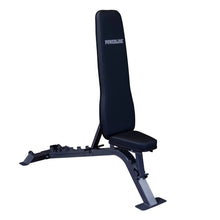
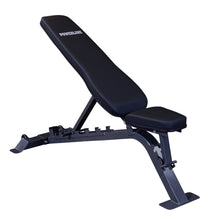
Bench placement is the other constraint people forget. The Body-Solid Powerline Flat to Incline Bench PFI150 is 50 inches long. If your rack's internal depth (front uprights to rear uprights) is only 36 inches, the bench will stick out past the uprights, which limits your squat depth and changes where you can position safeties.
Measure for the final configuration, not just the bare rack.
Installation Constraints: Flooring, Anchoring, and Delivery

Getting the rack into your space is half the job. Installing it correctly is the other half.
Floor Type and Stability
Concrete is the ideal surface. It's flat, it's stable, and it won't compress under load. Racks sit level on concrete without shims, and the floor's mass keeps the rack from shifting during heavy lifts.
Carpet is the worst surface. It compresses under the rack's weight, which creates an uneven base. The rack will rock slightly during reracking, and the feet will sink over time. If you're setting up on carpet, pull it back and install the rack on the subfloor, or use thick rubber mats (3/4 inch or more) to distribute the load.
Wood floors (plywood subfloor or hardwood) are middle ground. They're stable enough for light to moderate training, but they flex under heavy load. If you're squatting or deadlifting over 400 pounds, the floor will deflect slightly, which you'll feel as instability in the rack. Use mats to protect the floor and distribute the load.
Bolting vs. Freestanding Setup
Full racks don't need to be bolted on concrete. The four-post design distributes weight across a wide base, and the floor's mass prevents tipping. You can bolt them for extra security, but it's optional unless you're adding heavy attachments or training in a commercial setting.
Half racks should be bolted on any surface. The two-post design is less stable under lateral load, and aggressive reracking can tip the rack forward if it's not anchored. Bolting is especially important on carpet or wood, where the floor won't resist movement.
Bolting requires drilling into concrete (if you have a concrete floor) or lag-bolting into floor joists (if you have a wood subfloor). Concrete anchors are straightforward: drill, insert the anchor, tighten the bolt. Wood floors require finding the joists and making sure you're not drilling into plumbing or electrical runs. If you're renting, bolting may not be an option.
Shipping Weight and Delivery Planning
Shipping is curbside or threshold unless you pay for inside delivery. That means the freight company drops the boxes at your curb or just inside your garage door. You're responsible for moving them to your gym space and unboxing them.
Racks ship in multiple boxes. The PPR1000 typically arrives in three or four boxes, each weighing 80 to 100 pounds. You'll need a dolly or a second person to move them. If your gym is in a basement, measure your stairway width and door frames before you order. Some boxes won't fit through standard 30-inch doors.
Expandability: Rack Depth and Attachment Compatibility

A rack's depth determines what you can add later. Shallow racks (under 36 inches) limit your attachment options. Deep racks (48 inches or more) support the full range of lat pulldowns, cable systems, and leg press attachments.
Lat Pulldown and Cable Machine Clearance
Lat pulldown attachments mount to the rear uprights and extend backward. The Body-Solid Powerline Lat Attachment PLA1000 requires 30 inches of rear clearance for the weight stack and cable path. If your rack sits 24 inches from the wall, the attachment won't fit.
Cable crossover systems need even more room. The Body-Solid Powerline Cable Crossover PCCO90X requires 90 inches of width and 48 inches of depth, which is more than most home gyms can accommodate. If you're planning to add cables, measure for them before you buy the rack.
Some attachments are rack-specific. The PLA1000 fits the PPR1000 and PPR500 but not the PMP150. Check compatibility before you order. The Machine Attachments collection lists which attachments work with which racks.
Bench Placement and Squat Depth

Bench placement depends on rack depth. A rack with 48 inches of internal depth (front uprights to rear uprights) fits a standard flat bench with room for the bar to clear the uprights during bench press. A rack with only 36 inches of internal depth forces you to position the bench farther forward, which puts the bar path closer to the front uprights.
Squat depth is the same constraint in reverse. If your bench sticks out past the rear uprights, you can't squat deep without hitting the bench. You'll need to remove the bench, reposition it, or accept a shallower squat depth.
The fix: measure your bench length before you buy the rack. The Body-Solid Powerline Flat to Incline Bench PFI150 is 50 inches long, which fits comfortably in a 48-inch-deep rack but overhangs in a 36-inch-deep rack. If you already own a longer bench (54 inches or more), you need a deeper rack or a half rack where the bench can extend past the rear stabilizer.
Common Mistakes That Cost You Space and Money
Three mistakes account for most returns and regrets. Avoid them.
Buying a Full Rack for a Basement
Full racks are 83 inches tall or more. Most finished basements are 84 to 90 inches from floor to ceiling. That leaves 1 to 7 inches of clearance, which isn't enough for overhead press or pull-ups.
The mistake: buyers assume they can press outside the rack or skip pull-ups. Then they realize they're paying for a full rack's footprint and weight without getting a full rack's functionality. A half rack or multi-press rack would have fit better and cost less to ship.
The fix: if your ceiling is under 96 inches, start with half racks or multi-press racks. If you need a full rack, measure for it specifically and accept that you'll be pressing outside the rack.
Forgetting About Bar Loaded Depth
The spec sheet lists the rack's depth, not the depth with a loaded bar. A 48-inch rack becomes a 66-inch rack once you add a 7-foot bar (84 inches) and subtract the bar's position inside the uprights. The bar overhangs 18 inches on each side.
The mistake: buyers measure for the rack's footprint and forget about the bar. Then they realize they're walking into the bar every time they approach the rack from the rear, or they can't open the side door anymore, or they're loading plates with their back pressed against the wall.
The fix: add 18 inches to the rack's depth for rear clearance. If you're tight on space, consider a half rack or multi-press rack with a narrower footprint.
Not Planning for Future Attachments
You buy a rack that fits your current space and current training. Then you want to add a lat pulldown, or a dip station, or a cable crossover. The attachment doesn't fit, or it requires rear clearance you don't have, or it's incompatible with your rack model.
The mistake: buyers optimize for today's setup without considering tomorrow's needs. Racks last 10 to 20 years. Attachments are how you expand functionality without buying a second rack.
The fix: measure for attachments before you buy the rack. If you think you'll add a lat pulldown within two years, measure for the Body-Solid Powerline Lat Attachment PLA1000 now. If you're not sure, buy a rack with standard hole spacing (Westside or 1-inch) so you have options later. The Powerline by Body-Solid series uses Westside spacing across all models, which gives you the widest attachment compatibility.
Frequently Asked Questions
What's the minimum ceiling height I need for a power rack?
You need at least 8 feet (96 inches) of clearance for comfortable overhead pressing inside a full-height rack. The rack itself will be 83 to 84 inches tall, and you need another 12 to 13 inches for a loaded bar plus vertical arm travel. If your ceiling is under 8 feet, consider a half rack or multi-press rack. The Body-Solid Powerline Multi Press Rack PMP150 is only 52 inches tall and works in basements with 7-foot ceilings. You can also press outside the rack if you're willing to give up the safety of adjustable pins.
How much floor space does a half rack actually take up?
The Body-Solid Powerline Half Rack PPR500 has a footprint of 48 inches wide by 42 inches deep, but your total space requirement is larger. Add 16 to 18 inches for a bench inside the rack, 18 inches for bar overhang behind the rack, and 24 to 36 inches for rear walkway access. That's 100 to 112 inches (8.3 to 9.3 feet) of front-to-back space. Side-to-side, you need the rack's 48-inch width plus at least 12 inches on one side for plate loading. Total: roughly 60 inches (5 feet) of width and 100 inches (8.3 feet) of depth for a functional half rack setup.
Can I fit a power rack in a 2-car garage?
Yes, but with constraints. A standard 2-car garage is roughly 20 feet wide by 20 feet deep. A full rack setup (rack plus bench plus walkway) requires 8 to 9 feet of depth and 5 feet of width. That leaves 11 to 12 feet of depth and 15 feet of width for car parking, storage, and walkways. You can fit a rack and one car comfortably. Fitting a rack and two cars depends on how much storage you're willing to sacrifice and whether you can park cars bumper-to-wall. Measure your garage's usable depth (wall to garage door when closed) before you commit.
Do I need to bolt a power rack to the floor?
It depends on your floor type and training intensity. On concrete, bolting is optional. The floor's mass keeps the rack stable even under heavy lifts. On carpet or wood, bolting is recommended. Carpet compresses under load and won't grip the feet. Wood floors flex, which creates micro-movements that add up during compound lifts. If you're doing max-effort squats or deadlifts on carpet or wood, bolting prevents the rack from shifting forward or sideways. If you train lighter or plan to move the rack frequently, you can skip bolting on concrete but should still consider it elsewhere. Half racks should always be bolted regardless of floor type.
What's the difference between a power rack and a half rack in terms of space?
Half racks are shallower and narrower. The Body-Solid Powerline Half Rack PPR500 is 42 inches deep compared to the PPR1000 full rack's 48 inches deep. That 6-inch difference saves front-to-back space, which matters in narrow garages or basements. Half racks also weigh less (280 pounds vs. 320 pounds), so they're easier to move and cost less to ship. The trade-off: half racks are less stable under lateral load and offer fewer attachment points. Full racks support heavy lat pulldowns and cable crossovers without tipping. Half racks need to be bolted down for the same level of stability.
How much extra space do I need if I want to add a lat pulldown attachment?
Lat pulldowns require rear clearance. The Body-Solid Powerline Lat Attachment PLA1000 extends 30 inches behind the rack's rear uprights. If your rack sits 24 inches from the wall, the attachment won't fit. You need at least 30 inches of open space behind the rack, plus another 12 to 18 inches for the weight stack's vertical travel and cable path. Total: 42 to 48 inches of rear clearance. If you're planning to add a lat pulldown, measure for it before you position the rack. Once the rack is bolted down, moving it is a multi-hour job.
Will my power rack fit through a basement door?
Measure the door frame and the rack's assembled width. Most interior doors are 30 to 32 inches wide. The Body-Solid Powerline racks are 48 inches wide when fully assembled, which won't fit through a standard door. The good news: racks ship unassembled in multiple boxes. Each box is 80 to 100 pounds and narrow enough to fit through a 30-inch door if you angle it. Assemble the rack in your basement rather than trying to move it through the door fully built. If your stairway has a turn or a low ceiling, measure the diagonal clearance as well.
Conclusion
Most power rack guides tell you what to buy. This one told you how to measure for it. The difference between a rack that works and one that doesn't comes down to three constraints: ceiling height, floor depth, and attachment clearance. Measure for the loaded bar, not just the rack's footprint. Account for bench placement and rear walkway access. Plan for attachments before you bolt the rack down.
If you're working with an 8-foot ceiling and 9-foot depth, the Body-Solid Powerline Power Rack PPR1000 fits. If your ceiling is under 8 feet or your depth is under 8.5 feet, the Body-Solid Powerline Half Rack PPR500 is the better call. If you're setting up in a basement with a 7-foot ceiling, the Body-Solid Powerline Multi Press Rack PMP150 solves the height problem without sacrificing build quality.
Found your space constraints? Start with the Body-Solid Powerline Half Rack PPR500 for compact setups, or step up to the Body-Solid Powerline Power Rack PPR1000 if you have the room. Both are built for home gyms and come with real-world durability. For more rack options, explore the full Racks / Cages collection.