
Battle Ropes
Build explosive conditioning with battle ropes from PRx Performance and TRX — including 50-foot nylon-covered battle ropes, heavy-duty poly dac ropes, and wall- or rack-mounted battle rope anchors. Compare rope diameter (1.5" vs 2") and length to match intensity, grip demand, and available floor space for slams, waves, and HIIT circuits.

-
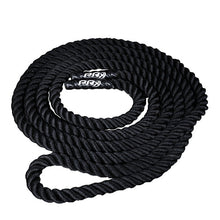
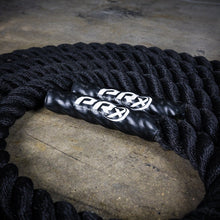 Vendor:PRx Performance
PRx Performance Battle Rope
14 in stockRegular price $104.99 USDSale price $104.99 USD Regular priceUnit price per -
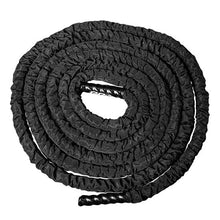
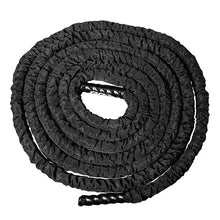 Up to 10% offSold outVendor:PRx Performance
PRx Nylon Covered Battle Rope
Regular price $89.99 USDSale price $89.99 USD Regular priceUnit price per$99.99 USD -
 Sold outVendor:PRx Performance
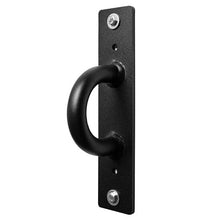
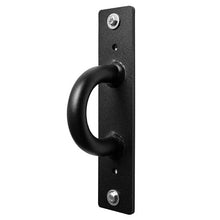
PRx Battle Rope Anchor
Regular price $49.99 USDSale price $49.99 USD Regular priceUnit price per
Compare Popular Battle Ropes


Frequently asked questions
What length and thickness should I buy?
Length: 30 ft covers most home gyms, 40 ft is the commercial standard, 50 ft is for pro facilities. Length determines workout intensity — longer ropes are heavier and more demanding. Thickness: 1.5-inch diameter is the general-use standard; 2-inch is heavier and builds more grip strength; 2.5-inch is for serious grip training. For most home users, 40 ft × 1.5 inch is the sweet spot.
Do I need an anchor to use battle ropes?
Yes — battle ropes must attach to a fixed anchor point. Options: a wall-mounted anchor (sold separately, mounts to studs or concrete), a power rack or squat stand (loop the rope around an upright), or outdoor anchoring to a tree or post. Some kits include a heavy-duty anchor kit; others sell separately. Check before ordering.
How much space do battle ropes need?
For a 40 ft rope folded in half at the anchor, you need 20 ft of clear space in front of the anchor, plus 6–8 ft on each side for full arm motion. This is more space than most indoor home gyms have — battle ropes often live in the garage, basement, or outdoors. Smaller 30 ft ropes need proportionally less space.
Poly Dacron or nylon — what's the difference?
Poly Dacron (the most common material) is affordable, durable, and doesn't shed — the standard for indoor gyms. Nylon is even tougher and more weather-resistant — better for outdoor storage. Avoid cheap manila or sisal ropes — they shed fibers, split over time, and can't match synthetic performance.
What workouts can I do with battle ropes?
Waves (alternating, double, lateral), slams, circles, jumping slams, ropes-to-squats combos, and more. A single 15-minute battle rope workout provides serious conditioning — they're a favorite for athletic training, MMA, and HIIT programs because they combine upper-body power endurance with serious cardiovascular demand.
Cable Machine & Functional Training Guides
-

Home Gym Space Requirements: Room-by-Room Guide
Generic home gym guides say "200-400 square feet" and leave...19 min readbuying-guide -

TRX Product Guide: Home2 vs Pro4 vs Tactical (Which Should You Buy?)
Choosing between TRX Home2, Pro4, and Tactical? Home2 is best...5 min readcable -

Essential Equipment for Your Bodybuilding Gym
Building a bodybuilding gym isn’t about collecting random gear. It’s...11 min readgym-design -

Stair Climber vs. Treadmill: A No-B.S. Guide (Home & Commercial)
Not sure if you need a stair climber or a...4 min readclimbers


